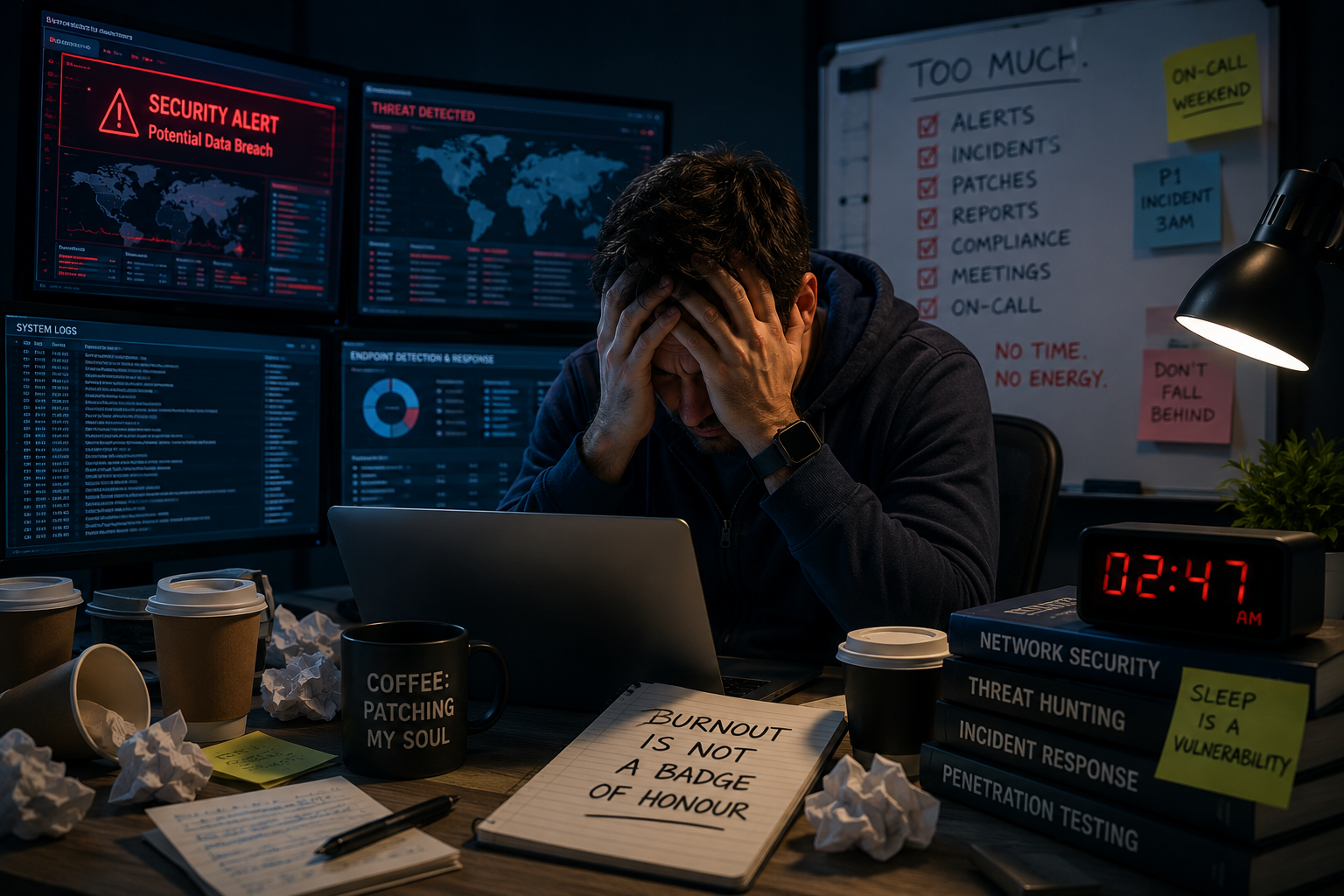
Security work combines high consequence, constant change and frequent interruption. When one person or a small team carries every alert, audit and incident, fatigue becomes an operational risk: judgement worsens, important signals are missed and experienced staff leave.
Warning signs leaders should notice
- Persistent out-of-hours work and cancelled leave.
- A growing backlog of alerts, patches, risks or audit actions.
- One individual holding critical knowledge or privileged access.
- Repeated manual tasks that should be automated or removed.
- Cynicism, withdrawal, reduced concentration or avoidable mistakes.
- Incidents repeatedly interrupting planned improvement work.
These signs require a management response, not a resilience lecture. The HSE’s Management Standards identify workload, work patterns, control, support and role clarity as important areas of work design.
Reduce unnecessary demand
Inventory alerts and reports, remove duplicates and tune rules that create noise without action. Automate routine evidence collection and patch reporting. Retire unsupported systems that consume disproportionate effort. Make sure every tool has an owner and purpose.
Design a sustainable response model
Define severity levels, on-call expectations, escalation routes and decision authority. Rotate demanding duties and ensure people can recover after a major incident. Use runbooks so critical work is not dependent on memory or one specialist.
Give the team time to prevent incidents
If every day is consumed by tickets and alerts, underlying risk never falls. Reserve capacity for patching, identity improvements, recovery tests, automation and lessons from incidents. Track whether accepted actions are actually completed.
Use external support deliberately
External services can add monitoring coverage, specialist skills or incident capacity, but responsibility must remain clear. Define what the provider owns, how it escalates and what information the internal team receives. Outsourcing noise without improving the operating model does not solve burnout.
Measure team resilience
- Alert volume and useful-to-noise ratio.
- Backlog age and recurring manual work.
- Out-of-hours demand and time off after incidents.
- Coverage for critical systems and key-person dependencies.
- Completion of preventative actions.
Astley Digital can extend an internal team with managed cyber security, monitoring and incident support, or take wider day-to-day ownership through our managed IT services.
Ready for a clearer technology plan?
Tell us what is slowing your organisation down. We will help you identify the practical next step.